Showing posts with label Geeking out. Show all posts

Monday, January 11, 2016

Visions of the Future: Sci-fi History Starter Pack


Over the past year or so, I’ve learned quite a bit about science fiction that I never knew before. Now, I can’t by any means claim to be an expert on the subject, but I have discovered a few fun things that I want to share. If you’ll remember, back in April, I made a “starter pack” of Star Trek episodes I thought would best introduce someone to the series. I’m going to do the same thing here, this time with some books, television episodes, and movies I’ve enjoyed watching, and think are a good introduction to science fiction history.
Novels of the 1800s-

1. Frankenstein by Mary Shelley (1818)-


Sometimes the classics are the hardest to get into. You hear about them all the time, but where do you start? Well, when it comes to science fiction, I suggest you start at the beginning, with Frankenstein by Mary Shelley. While the melodramatic ‘protagonist’, Dr. Victor Frankenstein, can be a bit long winded, his depth of insight, as well as the testimony of his creation, lay the groundwork for how sci-fi would explore the human condition.
2. 20,000 Leagues Under the Sea by Jules Verne (1870)-


Yes, there are a lot of descriptions of fish, but if you can accept that, you will be able to enjoy an entertaining precursor to space exploration stories such as Star Trek. The three main protagonists, as well as Captain Nemo are all very compelling. The interactions between Professor Aronnax, Ned Land, and Conseil even remind me of Captain Kirk, Mr. Spock, and Dr. McCoy a bit. If you are a sci-fi connoisseur or a hardcore Trekkie, this is a must-read.
3. Dr. Jekyll and Mr. Hyde by Robert Louis Stevenson (1886)-


Robert Louis Stevenson takes Shelley’s mad scientist and destructive creature and synthesizes them into the same person. This is one of those classics of literature where the title gets referenced and the plot gets recycled just about everywhere. It’s a quick read, too. I finished it in about one afternoon when I was reading it for a class.
4. The Time Machine by H.G. Wells (1895)-


Wells gets two spots on this list because he introduced so many of the classic sci-fi subgenres to the mainstream reading audience. While time travel had been played with before by the likes of Mark Twain, H.G. Wells was the first one to truly theorize about the methods of time travel- not just the results. Have you ever heard of time referred to as the fourth dimension? That’s because of The Time Machine. It’s also a pretty quick book to finish.

5. War of the Worlds by H.G. Wells (1897)-


When I started reading H.G. Wells and Jules Verne, I expected them to be a bit tedious, and was therefore amazed at how they kept me turning the pages. War of the Worlds is exciting. It’s terrifying. It’s compelling, and it is the quintessential alien invasion story.
Television Episodes-

Since the 1960s, one of the main ways sci-fi has reached the general public is through television. Shows like Star Trek and The Twilight Zone have made a lasting impact on our society. Here are ten sci-fi TV episodes that I think give a good overview of some of the best features of the genre.

1.  “Nightmare at 20,000 Feet” The Twilight Zone (1963)-
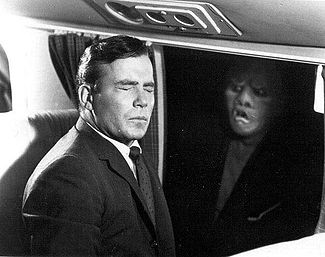

A fan-favorite, and a classic example of The Twilight Zone twist, this episode combines all the drama of William Shatner’s acting with all the eerie suspense of the show’s brilliant writing.

2. “The Production and Decay of Strange Particles” The Outer Limits (1964)-


If you haven’t watched The Outer Limits, you should definitely start. It’s like The Twilight Zone, but with hard sci-fi plots and happy endings. This episode is a great example of the fusion of a highly scientific concept with characters you grow to care about.

3. “The Aztecs” Doctor Who (1964)-


One of the very earliest adventures of William Hartnell’s first Doctor, this episode contains all the best elements of time travel sci-fi: intercultural confusion, the struggle over whether or not to interfere, and historical drama.

4. “Mirror, Mirror” Star Trek (1967)-


This is probably the best example of an alternate universe television episode there is. Or, at least it is the most iconic. Sure, it’s melodramatic, but that’s the fun of Star Trek. This episode takes everything you know about the Star Trek universe, and twists it just enough to make it creepy, but not so much as to make it overly dark. Plus, Mirror Spock has a goatee.

5. “The Schizoid Man” The Prisoner (1967)-


If you’re ready for a wacky, mod, surrealist adventure through the eyes of a man fighting to keep his individuality in a colorful, shiny, dystopia, you’re ready for The Prisoner. This gem of British television deserves to be watched in its entirety, (it’s only 17 episodes), but if you only have time for one, consider “The Schizoid Man”.  In it, protagonist Number Six, must fight for his sanity as his captors in The Village try to convince him by all methods at their disposal that he is someone else.

6. “Darmok” Star Trek: The Next Generation (1991)-


This episode boldly goes where no Star Trek episode has gone before, by exploring the intricacies of inter-cultural communication. Captain Picard spends time with an alien whose language is beyond the scope of the universal translator, and must learn to communicate with him.

7. “Never Fear” The New Batman Adventures (1997)-


Batman seems like a pretty fearless character, but it takes a dose of the Scarecrow’s anti-fear gas to show what his boundaries really are, and what will happen when he crosses them. This is also a great sidekick episode, as Robin (Tim Drake) has to be the one to reign Batman in.

8.  “Window of Opportunity” Stargate: SG-1 (2000)-


This episode demonstrates beautifully the way that Stargate: SG-1 was able to blend science fiction with humor, and emotional depth. There are a lot of hilarious beats as the SGC is trapped inside a ten-hour time loop, and Colonel O’Neill and Teal’C are the only ones who remember. However, it’s not simply a goofy episode, as the writers also explore some deep and emotional themes of grief and letting go.

9. “A Better World” Justice League (2003)-


This episode borrows from the ideas of Mirror, Mirror, and other alternate universe stories, and adds superheroes. The result is a study in the corrupting nature of absolute power, and the significance of every life.

10. “Dinosaurs on a Spaceship” Doctor Who (2012)-


When you take The Doctor and his companions, Cleopatra, a big game hunter from the turn of the century, dinosaurs and a villainous trader and put them on a space ship together, what do you get? You get exactly the type of quirky, adventurous, sci-fi romp we’ve all come to expect from Doctor Who. That’s what you get.
Films-
1. Metropolis (1927)-


This visually stunning dystopian story from the silent film era is a classic for a reason. It pairs impressive special effects with ahead-of-its-time social commentary for a truly memorable
masterpiece of science fiction.

2. Invasion of the Body Snatchers (1956)-


The aliens in this movie are horrifying in their invisibility. The paranoia and stress build throughout the movie to a cliff-hanger climax that has led to much speculation over the years as to the inspiration for the film.

3. Forbidden Planet (1956)-


This is the film that inspired Star Trek, Star Wars, and all the science fiction that came after them. If you’re a Trekkie or a Star Wars fan, you’re bound to recognize some element of the story or set that was pilfered for your favorite series. If you’re a sci-fi junkie, you’ll enjoy the Technicolor goodness, and the frightening revelations about the human condition.

4. Star Wars: A New Hope (1977)-


If you’ve never seen Star Wars before, I’m impressed. It’s best to start with the first one released. You’ll probably recognize the plot and characters from pop culture, but it’s exciting enough that you can still enjoy the ride after multiple viewings.

5. Star Trek II: The Wrath of Khan (1982)-


People who say that this is the best Star Trek movie ever are absolutely correct. It may seem dramatic to some, but it’s not supposed to be realistic. It’s supposed to be cinematic literature. Nicholas Meyer and Harve Bennett used all of the characters and actors from Gene Roddenberry’s groundbreaking 1960s show to their full potential in this one. Also, it’s my favorite movie ever, and I’m totally biased.
I’m still watching, reading, and listening, so I’m sure there are more things I’ll be able to add to this list in the future. Is there anything you would recommend to me? I’d love to hear about them. Let me know in the comments. I’m always game for good sci-fi!

Keep on glowing in the dark,
Elora

Sunday, May 24, 2015

Visions of the Future: The 1890s- Not Quite Utopia

The Gilded Age. The Victorian Era.The Second Industrial Revolution. The decade of the 1890s was a period of great wealth and prosperity for some, but a period of poverty and upheaval for others. The science fiction of the era was revolutionary, and set a precedent for what was to come in the succeeding centuries.

History:

The great struggle for the American continent continued with the Battle of Wounded Knee in 1890 between the Lakota tribe and the United States Cavalry. This was only one of the many continuing revolutions and internal conflicts that marked the decade.

The Panic of 1893 occurred in the United States after the railroad-based, overbuilt economy crashed. Yet, America still got involved in the war for independence in Cuba, leading to the Spanish-American war in 1898.

Some other notable events of the decade include the Klondike Gold Rush, and the commencement of the modern Olympic games.


Science:

[Still from Blacksmith Scene]
Inventors in the 1890s had a fixation with flight and travel. A notable milestone in flight history was the Derwitz Glider, a manned craft created and flown by Otto Lilienthal in 1891. The first commercial automobiles were produced by French company Panhard et Levassor in the same year.

Thomas Edison created the first motion picture device, the Kinetoscope, during 1893 and 1894. The first film, Blacksmith Scene, was shown at the Brooklyn Institute of Arts and Sciences on May 9, 1893.

Several discoveries were made in the fields of chemistry and physics during the 1890s. Within one decade, the elements argon,neon, krypton, and xenon were discovered, as well as the X-ray.

Stories:

In 1890, William Morris wrote News From Nowhere, a romanticist, Marxist utopia story he used to defend socialism.


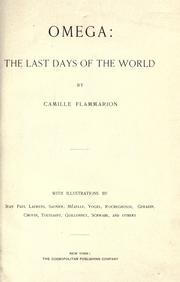
Author of the highly intellectual Lumen, Camille Flammarion published Omega: The Last Days of the World in 1894. It was about a comet made of Carbonic-oxide, which collided with earth in a fictional 25th century.  The story was very philosophical, as was its predecessor, and contemplated the consequences of an apocalyptic catastrophe.
And then there was H.G. Wells. Considered by many to be the Father of Modern Science Fiction, Wells revolutionized the science fiction landscape by intelligently and skillfully exploring the concepts that would become staples of the genre in the century to come.

In 1895, Wells published The Time Machine, the story of one traveller’s magnificent voyage through the fourth dimension to the far future, and the dystopian posthuman society he finds there. 1896 saw the publication of Wells’ The Island of Dr. Moreau, in which a mad scientist attempts to create intelligent animals through bizarre and unethical experiments. Finally, in 1898, H.G. Wells wrote the quintessential alien invasion story, The War of the Worlds, a frightening disaster tale of survival in the midst of strange and unbeatable odds.


What better place to transition into the science fiction of the twentieth century than with the classic works of H.G. Wells. As the century turned, science fiction reached a turning point as a genre.

Keep on glowing in the dark,
Elora

Thursday, April 16, 2015

A One-Year, Fifty-Post Special List!


It’s April 16th. Somehow, by some miracle, this blog has lasted for a whole year! Not only that, but it’s also managed to make it to fifty posts! I’m very grateful to be able to write about these things that I love in light of God’s truth, and share my thoughts with other people. It has been a great privilege and a great blessing. If you’ve been reading this blog from the beginning, or if this is the first post of mine you’ve ever read, I’m grateful for you!


Since it’s sort of a special occasion, I thought I’d write a special sort of post. This is something I’ve wanted to do for a while, and I might do some more of them later on. However, never fear, your regularly scheduled sci-fi history posts will resume after this week. For now, thanks for reading, and supporting me in this crazy blogging venture, and I hope you enjoy this Star Trek “starter kit”.


If you are a geek, you probably want to share the objects of your geeky affections with your friends. However, asking your friends to watch 1960s television, or read 1930s literature with you may attract strange stairs. Suppose for a minute, though, that someone finally caves in to your constant nagging, or perhaps you meet a fellow geek who wants to understand the thing you enjoy better. How do you introduce them to your favorite TV series, book subgenre, or set of movies? That’s what this list is for.


As you’ve all figured out by now, I am a huge fan of Star Trek: The Original Series. Oftentimes, I reference the show, then have to explain myself.  Occasionally, someone will offer to watch it with me, in order to attempt to understand my particular brand of weird. If they follow through with this decision, I have to decide which episode/episodes to show them. So, finally, I compiled a list of what I believe to be the ten most “user-friendly” episodes of Star Trek, that give people a good feel for what the series is. All in good fun, of course.


So, whether you are new to the series yourself, are trying to educate a reboot fan, or just want to do a mini-marathon with your nerdy friends for the fiftieth anniversary next year, I hope you enjoy this list.


1. “Let That Be Your Last Battlefield” (S03-E15)-

I wanted my first episode on this list to include the entire main crew that continues to appear throughout the movies and reboot stuff. So yes, I was doing a lot of nitpicking concerning the helm for this spot on the list. “Let That Be Your Last Battlefield” has everyone: Kirk, Spock, McCoy, Scotty, Uhura, Chekov, and Sulu. Aside from characters, this episode also gives a good feel for the bold, no-nonsense way The Original Series addresses the issues of its day. The endless struggle between the two different groups of aliens on Cheron makes a poignant statement about race relations. Plus, Captain Kirk gives some great speeches, and almost self-destructs the entire Enterprise.


2. “Devil in the Dark” (S01-E25)-

The Original Series introduces so many iconic creatures that it was hard to decide which ones to put on this list, much less which ones to put first. Finally, I decided upon the scary but sympathetic, silicon-based Horta. The antagonist that ends up having sympathetic qualities is a recurring  plot device in Star Trek, and the Horta is a good example of it. Plus, Spock performs a harrowing mind-meld, Bones says some iconic lines, and lots of redshirts die.


3. “The Trouble With Tribbles” (S02-E15)-

Perhaps the most iconic Star Trek episode. Everyone loves tribbles, (except for Klingons). Delta airlines even has tribbles in their safety procedures video. Look it up! Aside from the lovable but prolific furballs, this episode is also notable as one of the few Original Series episodes featuring the Klingons. Plus, all the characters are over the top! Bones and Spock banter, Kirk yells at bureaucrats, Scotty punches the Klingons that insult his ship, Chekov says that everything was inwented in Russia. It’s just fun.


4. “Amok Time” (S02-E01)-

The first episode of the second season introduces a lot of the things people regularly associate with Star Trek- the Vulcan salute, the fight music, Chekov. Plus, it has the entire cast, develops the Vulcan race, and features Kirk and Spock fighting!


5. “City on the Edge of Forever” (S01-E28)-

I’ll freely admit that “City on the Edge” is the best episode of the original series. It presents a fascinating time-travel conundrum, and the characters react in a very realistic, human way. It is a great episode of science fiction television, and provides good character development for the characters. So, why didn’t I put it first? Because, I think the real heart of Star Trek- even when the stories aren’t as good as “City on the Edge”- is the characters. When you get to know the characters first, you’ll enjoy them even more in the very best episode, and you’ll still like them even in “The Way to Eden”- if you can make it through all the singing.


6. “Space Seed” (S01-E22)-

Because you want them to understand Wrath of Khan, right? This episode is a great story of the corrupting influence of power, betrayal, loyalty, genetic engineering and suspended animation starring a well-acted and intriguing villain on its own. But when you pair it with the Wrath of Khan, all sorts of themes, ideas, excitement, crying, screaming, and a little bit of confusion, (who was where what season, huh?) ensue.


7. “The Naked Time” (S01-E04)-

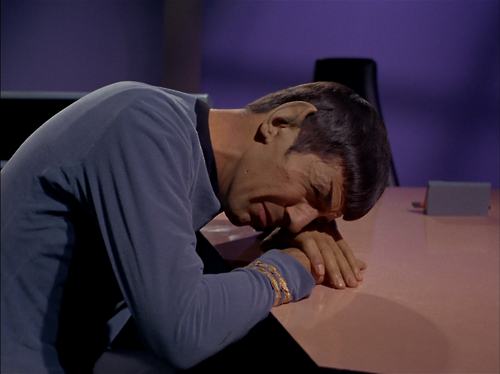
Once you get to know a set of characters, it’s fun to watch them act all out of sorts. Like Spock crying, everyone wants to see Spock crying, (it’s sad, though. I feel for the guy). I’m impressed that the writers were able to so develop the characters in the first three episodes, that the differences in this episode were notable. Also, they invent time warp. Plus, Sulu fences everyone he sees, Kirk dotes on the ship, Kevin Riley, and a lot more clothes than the title implies.


8. “Balance of Terror” (S01-E14)-

This is one of those great, thought-provoking episodes of Star Trek that makes you wonder things like: “are the people I hate really all that different from me?” It introduces the alien race, the Romulans, and their tumultuous relationship with the Federation- a conflict that continues to be an important plot point even into the reboot movies.


9. “Mirror, Mirror” (S02-E04)-

This is the quintessential alternate universe episode of science fiction television. You have probably heard or seen jokes about or references to Spock’s beard even if you haven’t seen this episode. It is an interesting look into the twisted “could-be” Star Trek universe, and brings the characters face to face with the darker side of their natures. Also, Uhura slaps Sulu in the face, Spock calls people illogical, Chekov screams (it happens a lot in the series and the movies, so get used to it), and everyone smiles creepily.


10. “By Any Other Name” (S02-E22)-

This is one of those episodes where you get to see all the characters in their element. Well, except for the ones who get turned into salt cubes. They are in their elements too, just those elements happen to be sodium chloride… Anyway, Kirk, Spock, McCoy and Scotty have to work together to stop some aliens from the Andromeda galaxy from taking over our galaxy. It’s good, old fashioned Star Trek fun. Also, they almost self-destruct the Enterprise, Kirk gets the girl and gets in a fight, and the only female redshirt to die in the entire series meets her demise.


Thanks for reading. I hope you had fun reading through this list, because I most certainly had fun writing it. Thanks for your support and encouragement over this past year. If you have any thoughts on great Star Trek episodes, or any ideas of things you want to see on the blog moving forward, let me know in the comments!


Keep on glowing in the dark,
Elora

Wednesday, April 15, 2015

Visions of the Future: The 1860s- Foreshadowing

The world was expanding. Technology was expanding. War was expanding. The seeds of the conflicts that would mark the next century were being sown even as early as the 1860s.

History:

After a decade marked almost entirely by conflict, it is relieving to look into history and see the end of a war. In 1860, the Second Opium war between China and Great Britain came to a conclusion. However, the 1860s were hardly a decade of widespread peace. The United States waged a bloody civil war from 1861 to 1865. In 1865, President Abraham Lincoln was assassinated, stagnating the nation’s already slow advance towards peace and restoration. In 1864, the Austro-Prussian war began. This was only a small part of the ill-will and resentment that was festering in Europe, which would eventually escalate into the widespread terror of World War I.


Science:

(Mendeleev and his periodic table)
The 1860s saw many advances in the organization and implementation of the sciences. For example, in this decade, Russian chemist Dmitri Mendeleev organized one of the earliest versions of today’s periodic table of the elements, (yes, it actually was invented in Russia!). Also, Gregor Mendel developed his laws of genetic inheritance. International science exhibitions came into popularity during the 1860s, with one taking place in London in 1862, and another in Paris in 1867.

Many previously invented technologies came into everyday usage. For example, the transatlantic telegraph was installed in 1866, and the United States’ Transcontinental Railroad was completed in 1869.

As for new inventions, Alfred Nobel invented dynamite in 1867, (it will forever amuse me that the guy who invented dynamite has a peace prize named after him), and an early submarine was developed in 1869.


Stories:

I consider there to have been three main periods in the first 100 years of science fiction. The first period was marked by several writers who were mainly Romanticist in their philosophy. Think of the early stories by Mary Shelley, Edgar Allan Poe, and others. This period came to an end around the 1850s-60s. The next period was dominated by one author in particular, a modernist Frenchman named Jules Verne. Maybe you’ve heard of him. The Vernian age of science fiction (is that too dramatic? Because I like it), lasted approximately from the 1860s to the 1880s, when he began to be upstaged by one H.G. Wells.

In 1863, Verne published a follow-up novel to his short story “A Voyage in a Balloon”. Five Weeks in a Balloon had a similar theme and plot to the 1851 lighter-than-air adventure, but with an expanded scope. In 1865, Jules Verne published one of his most popular and fascinating stories, From the Earth to the Moon. It told the story of a group of gun-enthusiasts in Baltimore who invented a space-gun, with which they propelled themselves towards the moon. This story predates the actual moon-landing by over a hundred years, and bears an eerie resemblance to the actual event. For example, Verne launched his characters into space from a base in Florida. The Apollo 11 mission started at the Kennedy Space Center in Merritt Island, Florida. Verne’s calculations for the cannon were very nearly accurate, but the muzzle would have needed to be much longer to achieve actual space flight.

Though Jules Verne was most definitely the most influential sci-fi author of the time, he was not the only one. In 1868, Edward F. Ellis published the first science fiction dime novel, The Steam Man of the Prairies, a quintessential story in the budding Edisonade genre. This genre was inspired by prolific American inventor, Thomas Edison, and usually starred boy-geniuses and their wacky inventions.

In 1869, Edward Everett Hale published The Brick Moon, the first work of fiction to feature an artificial satellite populated by humans.


Worldview:

It is fascinating to note how much the early 20th century was impacted by the events, ideas, and innovations of the 1860s. For example, the seeds for one of the most destructive ideologies in the past century, Communism, were sown in 1867, when Karl Marx first published his thoughts on society in Das Kapital.

The world would never be the same after the 1860s. The stage was set, and the drama that would consume the next century was already in motion.

Thanks for reading! I’ll be back tomorrow with a very special post. It will be my one year anniversary of writing this blog, as well as my 50th post. It will deviate from our trek through sci-fi history, (though trekking will most definitely be involved), but I think it will still be pretty fun. I hope you can join me. As always, I’d love to hear from you in the comments!

Keep on glowing in the dark,
Elora