Showing posts with label Monsters. Show all posts

Thursday, June 18, 2015

Visions of the Future: The 1910s- The World on Fire

In spite of the turmoil that marked the turn of the 19th century to the 20th, this time period showcased the most advanced technology and the highest standard of living of any time in recorded history to that point. The future indeed looked bright. However, the underlying tension in the world would come to a head, and force people to look at the dark side of the prosperity and scientific advancement of the time. The events of the years from 1910-1919 would change humanity’s visions of the future forever.

History:

The reign of technology had as of yet been unchallenged when the builders of the passenger liner RMS Titanic declared their craft unsinkable. However, their hastiness proved to be tragic as the liner was wrecked on an iceberg on April 15, 1912.

Sparked by the death of Archduke Franz Ferdinand, and fueled by the increasing militarization of Europe, the Austro-Hungarians declared war on the Serbians on July 28, 1914. Allies on both sides were dragged into a conflict the likes of which had never been seen before. The scope of the battlefield, and the new military technologies, such as tanks, airplanes, chemical warfare, and advanced weaponry earned this war names such as “The Great War”, or “The World War”. The generations that lived through the war were shaped by the inhumanity and violence they had witnessed, and their worldview was shaped by it.
In 1917, the Bolshevik Revolution overturned the power in Russia, and resulted in the Soviet Union becoming the first official communist state in the world.


Science:

[The Metropolitan Opera House]

Aside from military technologies, transportation and communication continued to be developed in the 1910s.

On January 13th, 1910, the first radio transmission was broadcast from a performance at the Metropolitan Opera House in New York City.

Theoretical physicist Albert Einstein continued to turn scientific theory upside down, and published his general theory of relativity in 1915.

Another earth-shattering discovery occurred in 1919, when Ernest Rutherford successfully transmutation of an atom for the first time.

Stories:

[Frankenstein- 1910]
The 1910s saw many great science fiction classics on the silver screen for the first time. In 1910- nearly 100 years after its initial publication, Mary Shelley’s Frankenstein was adapted into a silent film. It was followed by Robert Louis Stevenson’s Dr. Jekyll and Mr. Hyde in 1913, and Jules Verne’s 20,000 Leagues Under the Sea in 1916.

Film had not displaced the written word, however, and several influential stories were released by new and beloved authors.


In 1911 Hugo Gernsback published his story “Ralph 124C41+” in serialized form in the magazine, Modern Electrics. It told the story of the protagonist, Ralph, saving the heroine from disaster using technological marvels. It was highly predictive of coming technologies. Some of the most notable predictions Gernsback made are the video phone, television, transcontinental air travel, solar energy, sound movies, synthetic food and materials, space flight, and radar.


In  1912, Edgar Rice Burroughs, who would become known for his pulp adventure science fiction stories, published the first of his Mars based stories, Under the Moons of Mars, (later known as A Princess of Mars), which introduced the iconic space traveler John Carter.
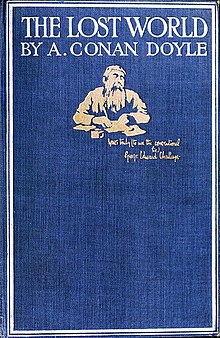

The same year, Arthur Conan Doyle, most notable for his Sherlock Holmes mysteries, published The Lost World. This is one of the last novels in the subgenre that has since been named after Doyle’s story. The Lost World tells the tale of an expedition to a forsaken plateau in the Amazon basin where prehistoric creatures such as dinosaurs still roam.
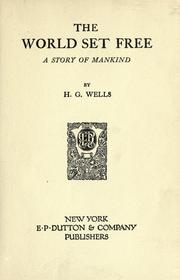

Always innovative and predictive, H.G. Wells published The World Set Free in 1914, in which he predicted nuclear weapons, and their potential effects on the world.


“The City of Endless Night” by Milo Hastings was an early tale of the dystopian genre, first appearing in serialized form in 1919. In the spirit of the post- Great War world, it described a revitalized Germany, and predicted the rise of fascism.

Keep on glowing in the dark,
Elora

Wednesday, May 27, 2015

Top-5 Tuesday- Most Influential Sci-Fi Novels of the 19th Century

[This is my sci-fi shelf. And yes, it is in chronological order]

I’ve talked about them all before, but these are the game-changers, the classics, the turning points- the top five science fiction novels from the 19th century you definitely need to read.

5. The Time Machine by H.G. Wells (1895)-

Do you love Doctor Who? Geek out over Back to the Future? Enjoy a good time travel episode of Star Trek or Stargate? Then you should read The Time Machine. While it’s not the first piece of time travel fiction, it defines the sub-genre in a way nothing else before it had. Have you ever referred to time as the fourth dimension? Just another contribution from H.G. Wells to society.

4. From the Earth to the Moon by Jules Verne (1865)-

There is no doubt that Jules Verne was a master of imaginative science fiction. His space adventure, De la terre à la lune, was not only uncannily close to actual moon landing events 100 years later, but it also inspired generations of writers, scientists, and visionaries to shoot for the moon. You’ll even find reference to this novel in the newly released Disney movie, Tomorrowland.

3. Frankenstein by Mary Shelley (1818)-

The one that started it all. This hybrid horror story was allegedly born on a dark and stormy night in the mind of an eighteen-year-old girl. It united mythology with science, and philosophy with electricity in a new and revolutionary way that has forever impacted literature and culture.

2. Dr. Jekyll and Mr. Hyde by Robert Louis Stevenson (1886)-

If any science fiction story can be called modern mythology, this one can. It has inspired countless copies, spinoffs, spoofs, and remakes, as well as retaining its distinction as an individual work of classic literature. Whether or not you enjoyed reading it in your literature class, you have probably enjoyed something that was inspired by it, such as the Star Trek episode, “The Enemy Within”.

1. The War of the Worlds by H.G. Wells (1898)-

Yes, he’s back again. The War of the Worlds has fascinated and frightened audiences from the beginning. Not only was it popular as a serial story, then as a complete novel, but it also made radio history when presented in Orson Welles’ legendary broadcast, and spawned several silver screen adaptations. If I say it is the quintessential alien invasion story one more time, will you guys be mad?

What are your favorite 19th century sci-fi stories? Which ones are you planning to pick up this summer? How have you enjoyed our trek through sci-fi history so far? I’d love to hear from you in the comments. Don’t forget to come back next Wednesday as we dive into a new century of science fiction!

Keep on glowing in the dark,
Elora

Tuesday, April 14, 2015

Top 5 Tuesday- Movies Based on 19th Century Sci-fi

When you think of Frankenstein's monster, do you see a mental picture of a green, hulking creature with a long forehead, and a bolt through its head? How about H.G. Wells’ Time Machine? Do you imagine the machine looking like a wooden, Victorian sled with an intricately designed disc on the back? If you do, you’ve probably been influenced by the movie adaptations of some of sci-fi’s early classics. The best of these films were just as iconic as the books they portrayed, and helped add to the cultural recognition of the stories.

Here are five of the very best film adaptations of 19th century sci-fi. This list is in chronological order of the production dates of the films.

1.Frankenstein (1931)-

This classic of cinema brought the vision of the green-skinned, long-faced monster into the public imagination- mostly due to the efforts of makeup director James P. Pierce. It was directed by James Whale, and starred Colin Clive as Frankenstein, and Boris Karloff as the monster. Though it may not have followed the plot laid out in Shelley’s novel, it captured the thematic heart of the story.

2. The Invisible Man (1933)-

This innovative film was also directed by James Whale. Based on H.G. Well’s 1897 thriller, it starred Claude Rains as the scientist whose creation drove him to insanity.... and invisibility.

3. War of the Worlds (1953)-

Not only was this quintessential alien invasion novel a success when H.G. Wells published it in 1898, and a sensation when Orson Welles sent it out on the airwaves, but it also made an impact on the world of cinema. Directed by Byron Haskin (surprisingly not named Wells), and starring Gene Barry, and Ann Robinson, it amazed movie viewers with its startling special effects, and sympathetic look at the human protagonists.

4. 20,000 Leagues Under the Sea (1954)-

Directed by Richard Fleischer, and starring Kirk Douglas, James Mason, and Paul Lukas, this classic Disney film brought Jules Verne’s undersea adventure to life in vibrant technicolor.

5. The Time Machine (1960)-

Directed by George Pal, and starring Rod Taylor (and a beautiful and iconic time machine model), this film updated the classic tale to play to the hopes and fears of the space age audience, all the while retaining H.G. Wells’s (yes, him again), inventive concepts of the future.

What classic sci-fi films have shaped the way you view the books they came from? What else should I have put on this list? I’d love to hear from you in the comments. Also, the next post on this blog will be my fiftieth, and I will post it on the year anniversary of Potassium With a Capital K. It’s going to deviate a bit from our sci-fi history series, but it should still be fun. I’m very excited. Thanks for reading!

Keep on glowing in the dark,
Elora

Tuesday, April 7, 2015

Top-5 Tuesday- Memorable Sci-fi Characters of the 1800s

If you hadn’t guessed already, I have a special fondness in my heart for good fictional characters. Though sci-fi historically has been a genre more of speculation than of character arcs, the best science fiction stories have been able to develop their ideas as well as their protagonists, antagonists, and side characters. I just discussed one of the most iconic characters in all of science fiction on Saturday, but today we are going to take a look at the characters who connected readers to the earliest science fiction stories.

Let’s get to it!

5. Hank Morgan (A Connecticut Yankee in King Arthur’s Court by Mark Twain)-

An early adventurer through time, Hank Morgan, the titular Connecticut Yankee, bumbles his way through the past, trying to conform the Medieval world to his own standards of civilization. As bad as that sounds, how many of us wouldn’t do the same under similar circumstances?

4. The Time Machine/The Time Traveller (The Time Machine by H.G. Wells)-

Can a time machine be a character? Just take the issue up with your local Doctor Who fan, and I think you’ll be convinced. The Victorian sensibilities and personality of the title character of this book has sparked many an imagination, and inspired many an imitator, especially after it was brought to the silver screen in the 1960s adaptation of Wells’ classic. However, the adventurous protagonist, The Time Traveller, provides the heart of the story and the machine, and evokes a sense of wanderlust for other times in readers.

3.  Captain Nemo (Twenty-Thousand Leagues Under the Sea by Jules Verne)-

This Indian prince turned mad inventor is the early science fiction equivalent of Captain Ahab from Moby Dick. However, this crazed captain’s vengeful intentions are turned toward the British Empire rather than a white whale. With a thirst for revenge, and remorse over the deaths of his crew, Captain Nemo set a precedent for many a great antihero.

2. Frankenstein and His Monster (Frankenstein by Mary Shelley)-

A classic example of confused name, the sympathetic creation in Mary Shelley’s classic is often tagged with the name of his creator, and when mad scientist Victor is mentioned, images of his monster. Both the tormented young scientist, and his forsaken creature, however, are well-developed characters who earn the investment readers put into their story.

1. Dr. Jekyll/Mr. Hyde (The Strange Case of Dr. Jekyll and Mr. Hyde by Robert Louis Stevenson)-

Jekyll/Hyde is a classic and fascinating dichotomization of human nature. Good vs. evil, power vs. weakness, cruelty vs. compassion- these are all things we are forced to wrestle with. Robert Louis Stevenson presents this struggle in a literal way through a character/characters we simultaneously root for and despise.

What do you think? Who else belongs on this list? What are your favorite early sci-fi characters. I’d love to hear from you in the comments! Thanks for reading!

Keep on glowing in the dark,
Elora

Thursday, June 26, 2014

It's Alive!


 Many people consider Mary Shelley’s Frankenstein to be the first novel that can be concretely classified as science fiction. It is the story of a scientist who discovers the secret of creating life. He uses the science of his day to construct a living creature out of dead tissue. In doing so, both the author and her protagonist stumble upon a moral conundrum that has fueled sci-fi ever since. What happens when man tampers with the affairs of God?


     The question is not so much ‘can man create life?’; that is the domain of scientists. It is the job of science to answer the ‘can we?’. It is the job of science fiction to answer the ‘what if we?’. What if we had the ability to create life?


    Where did we get this kind of a question? We got it in the Garden of Eden when we learned an important but tragic lesson about human pride.


"Then the serpent said to the woman, ‘You will not surely die. For God knows that in the day you eat of it your eyes will be opened, and you will be like God, knowing good and evil.’ So when the woman saw that the tree was good for food, that it was pleasant to the eyes, and a tree desirable to make one wise, she took of its fruit and ate. She also gave to her husband with her, and he ate”. - Genesis 3:4-6 NKJV


     The thing that tempted Eve about the fruit was not that she thought it would taste good, but that she thought it would make her like God. God is the creator of life. Therefore, attempting to mimic this creation is attempting to control our own destiny as humans. Like Eve biting into the fruit of the tree of the knowledge of good and evil, it is attempting to make ourselves like God. No wonder the search for the secret of life fascinates us so much. It has always fascinated us.


    Science fiction gives us a laboratory, if I may, in which to experiment with this idea. Oftentimes in fiction, ‘playing God’ results in disaster, just as it did in reality. Here are a few familiar examples. Though these categories don’t  always show the downsides of tampering with life, or even ask the questions I’m discussing, they very frequently do:


1. Man-made Monsters-


    Frankenstein's Monster, Mr. Hyde, and similar early science fiction and horror icons often leave death in their wake and cause the destruction of their creators.


2. Robots-


    (I’m not going to get into ideas of sentience and personhood right now. That’s a post for another time. Or a lot of posts for a lot of other times.) Though not technically alive, these machines with a personality (and sometimes a temper), can spell doom for humanity. They also have a tendency to try to become the dominant ‘species’ in the cosmos. Think of V’ger or Nomad from Star Trek, the Cylons from Battlestar Galactica, and Ultron from Marvel Comics. (Also, there is a Classic Doctor Who episode called “The Robots of Death”. I thought I would just throw that one out there. )


3. Clones-


    They are pretty similar to robots in their usage, only they’re biological, and made with already existing DNA. Some clones (as well as some robots), can be harmless and even heroic characters. However, they can also be the source of all sorts of moral and practical mixups, chaos and confusion. For example, in the Star Wars prequels, they were corrupted into a huge war-machine made up of identical, expendable soldiers.


4. Genetic Engineering-


     You could say it has its pros and Khans… (alright, that was terrible, but do you know how long I've been waiting to use that one?). On the one hand, you can get someone like Captain America. On the other, you can get someone like Khan Noonien Singh- which is bad.


(Fun and geeky side note- Another member of Khan’s genetically engineered super-race appears in the Star Trek Animated Series episode, “The Infinite Vulcan”)


5. Terraforming-


    Though this creates a different sort of life than the other examples, it is still an example of humans trying to shape and control life. Usually, terraforming stories end with the destruction of pre-existing life, or just failure.  Consider Stargate SG-1 episode, “Scorched Earth”, The Genesis planet of the Star Trek films, and the xeno-terraforming in The War of the Worlds.


    Should man tamper in the domain of God? What would be the result if he did? These are questions that we have grappled with since the beginning of science fiction, and really, since the beginning of humanity. We are created in the image of God, yet we are creatures who are subject to Him. When we try through our own ingenuity to make ourselves great, or exalt ourselves to the loftiness of God, we will always fail. Still, concepts of life from non-life are fascinating to us. There is much to explore, much to learn about the human condition and our place in the universe. What are the limitations? When is it right and when is it wrong? What are the consequences? Why are they there? These are the questions that will continue to inspire science  and fiction until the end of time. And when we genuinely search for answers, we will find them in the Creator and Owner of all life.


Hello again! I'm back! Now that it's summer, I'm hoping to post more regularly. So, don't join me next week, because I'll be out of town....But! After that, I'll try to post articles like this on Wednesdays, exciting top 5 lists on Tuesdays, and random snippets of geekiness on Saturdays. The next of these Saturday shorts will be an explanation of the name of this blog.

Hope you enjoyed this post. If you have any ideas or examples of your own on this topic, please comment! I'd love to hear from you!

Keep on glowing in the dark,
Elora