Showing posts with label Time. Show all posts

Wednesday, January 14, 2015

Top-5 Tuesday: Stories That Paved the Way for Science Fiction

Hey everyone! I wrote this post yesterday, and was all ready to put it up. Unfortunately, I was not prepared for the event of catastrophic systems failure. Fortunately, I am still able to present to you Top-5 Tuesday!!! On Wednesday…


I think it is pretty reasonable to assume that nothing originates in a vacuum. That goes for science fiction as well as anything else. Since we’re about to delve into the exciting history of the genre, I thought it best to do a little preliminary research into its prehistory. Where did science fiction get its inspiration. Where did the themes and styles originate. What stories did the earliest pioneers of sci-fi draw from when they wrote.


Obviously, there are far too many items to fit on this one list. These are just five interesting stories in history that laid a foundation for the stories we enjoy today. Rather than putting this in order of importance, (because I really couldn’t say), I’m putting it in chronological order.


So, charge up your flux capacitors, set your chronometers, and strap in. We’re about to take a trip through time!

The Epic of Gilgamesh (c. 2100 B.C.)-
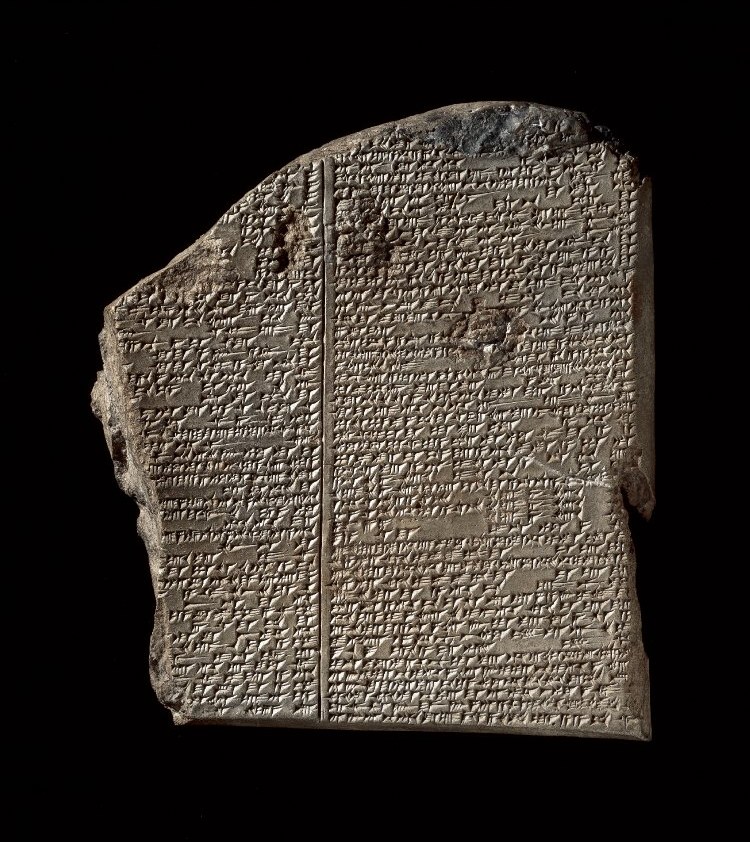

The Epic of Gilgamesh is one of the earliest known works of literature. It sets a precedent for all stories that came after it by exploring themes of life, death, immortality, and humanity’s relationship with higher beings.


A True Story or True History by Lucian of Samosata (2nd century A.D.)-


This epic parodies the Iliad, the Odyssey, and other classical stories that claimed to be historical in nature, but were steeped in myth and legend. Lucian, a Greek-speaking Assyrian, spun a tale of fantastic voyages to the heavens, and cosmic battles between the celestial bodies. Basically, space travel.


The Divine Comedy by Dante (c. 1308-1321)-


This masterful poem had an impact on almost all literature that came after it, including science fiction. It details a journey into the physical realms of Hell, Heaven, and Purgatory, which is at the same time a metaphorical journey into the depths of human nature.


Utopia by Sir Thomas More (1516)-
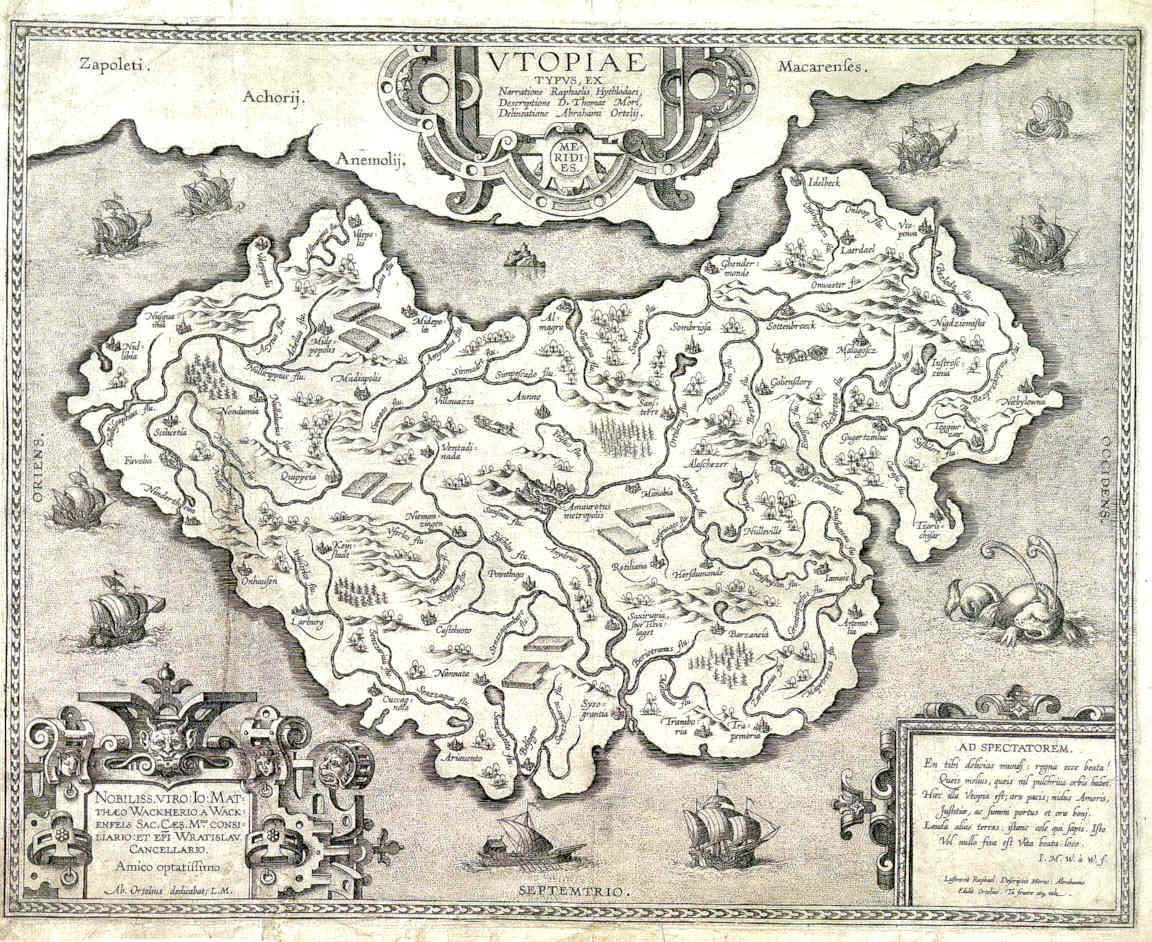

More set the precedent for an entire genre of fiction by describing an island similar to England which instituted what he considered to be the perfect society. Today, the kind of speculation More made is commonly used in science fiction in depicting future civilizations and alien societies. This novel also became the basis for the offshoot genre of Utopian fiction, Dystopian fiction.


Gulliver’s Travels by Jonathan Swift (1726)-


This satire describes a fantastic voyage which the author explains in a manner more rational than magical. Swift pokes fun at the political affairs of his day through strange creatures and unusual settings. He also explores ideas of the importance of humanity and its affairs.

These stories are only a few that introduced themes and concepts vital to the relatively new genre of science fiction. Have any more masterpieces I should have added? Further details on how one or more of these inspired sci-fi? I’d love to hear from you in the comments! I hope you join me next week, as I begin my series on the history of sci-fi with the novel that is generally considered to be the first of its kind, Frankenstein.


Keep on glowing in the dark,
Elora

Saturday, December 6, 2014

Top 5 Tuesday(?)- Time Machines!

Wait! Saturday?! How did I get here? Looks like my time machine systems need a reboot  (unlike some things). Sorry, I was supposed to travel to Thursday for this post, but looks like I overshot that by a few days! Since I’m here, I might as well give you friends in the future this list of the top 5 time machines.

Here goes!

5. The Imagination Station (Adventures in Odyssey) -


If you haven’t listened to Focus on the Family’s ongoing audio drama about the small town, Odyssey, you should definitely give it a try! It is not really a sci-fi show, but there are lots of good sci-fi elements in it. The Imagination Station is technically a virtual reality machine invented by the local ice cream shop owner and all-around great guy John Avery Whittaker. However, the kids of Odyssey usually use it to explore Biblical and historical scenarios. It is one of the most fascinating features of Mr. Whittaker’s shop, Whit’s End, and of the entire show.

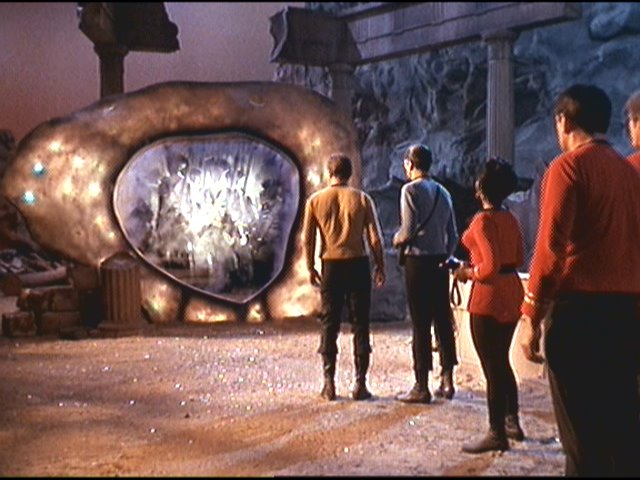
4. The Guardian of Forever (Star Trek) -


“City on the Edge of Forever” is generally held to be the best episode of Star Trek: The Original Series. This living time portal is the driving force of the story. Though this is the only episode of TOS it appeared in, it has been revisited in several Star Trek novels, and the imaginations of fans everywhere.

3. The Delorean (Back to the Future) -


One of the most iconic time machines in recent history, the Delorean combines all the best elements of time travel and breaking the speed limit in a really cool car.

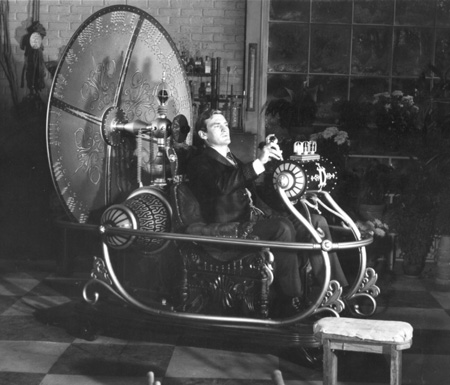
2. The Time Machine (The Time Machine) -


H.G. Wells’ groundbreaking novel was one of literatures first forays into the fourth dimension. Even with the modern influx of time travel stories, his vehicle is still one of the first that comes to people’s minds at hearing the words ‘time machine’. After all, it is The time machine.

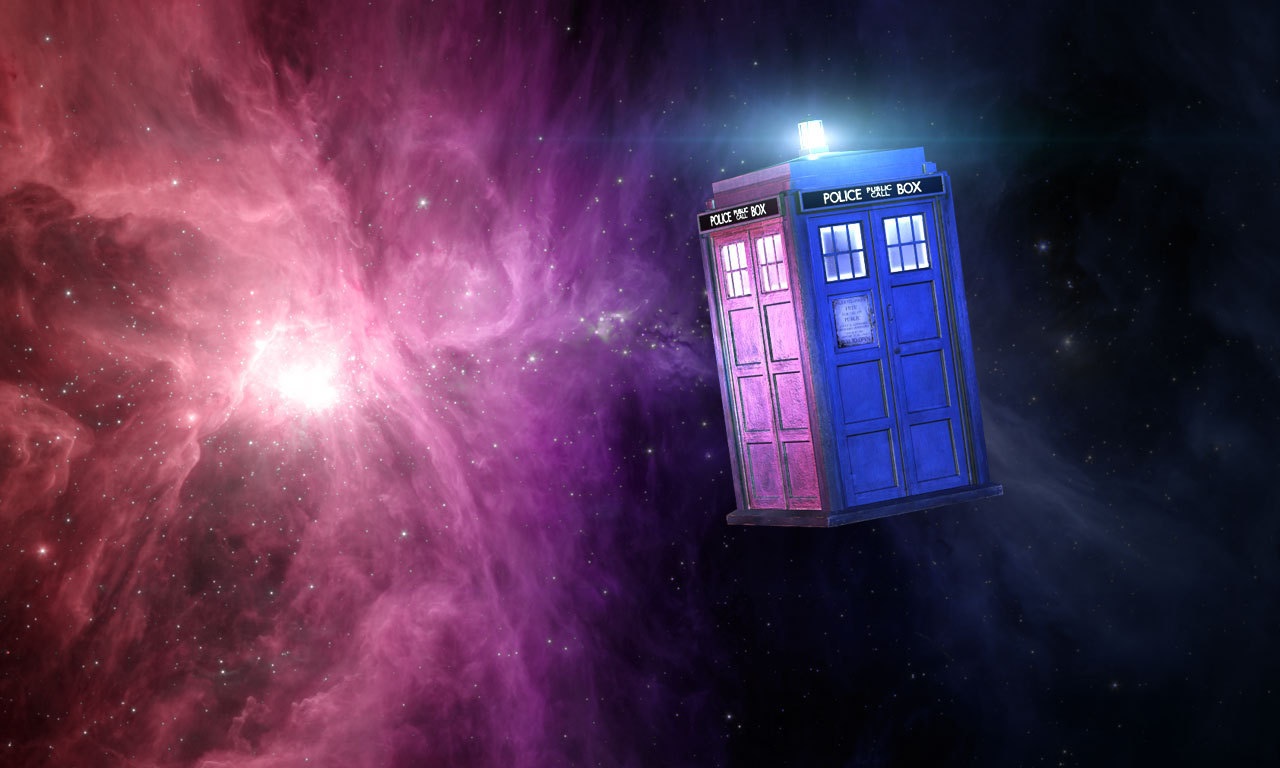
1. The TARDIS (Doctor Who) -


Of course I don’t want to get in trouble with all my fellow Whovians, but even aside from that, I do think the TARDIS is the best time machine around. We just keep learning cool things about her! She’s bigger on the inside, she’s actually alive, she’s dimensionally transcendental ( I just love saying that). Plus, the TARDIS is an example is a prime example of sci-fi changing the cultural perception of an everyday item. Fifty years ago, a police box was just a police box. Now, it is probably a time machine.

So, how did I do? What time machines would you add to my list? I’d love to hear from you in the comments!

Keep on glowing in the dark,
Elora

Wednesday, November 26, 2014

Staring at the Sun

Hey all! I wrote this post as a reflection on a book I read for school called Conformed to His Image, by Kenneth Boa. It’s a great read, and it taught me a lot. I recommend it! These are a few of the things I learned…


     I’ve been told my whole life not to stare at the sun, but I still do. I don’t literally stare at the sun, of course. Otherwise I wouldn’t be able to see. I do, however, perform the mental equivalent of staring at the sun when my puny, human brain tries to wrap itself around the concept of eternity. I hear the charge in Colossians 3 to “set your mind on things above”, and take it as a call to completely understand what my life will be like after death. In my current state, I can’t imagine anything without an end, so the thought of eternity can be blinding and paralyzing. The question remains, however. How do I “set my mind on things above”? Through the book Conformed to His Image, by Kenneth Boa, I learned that pursuing God is meaning enough for my life now, and throughout all of eternity.
  In 2003, the Hubble telescope photographed galaxies over 13 billion light years away. Some of these galaxies contained eight times as many stars as the Milky Way galaxy, defying current physical theories by their sheer size. God knows every one of the stars in those galaxies by name.  In 1968, Physicists discovered that the proton, one of the three particles that makes up the atom, is itself a composite particle. They observed an even smaller particle called a quark, which makes up both protons and neutrons.  In the scientific world, the quark was groundbreaking and revolutionary. God, however, knew about these incomprehensibly small particles since the beginning of time, when he spoke them into being. He transcends everything that we can see and that we know exists. Our God is one, but also three persons. From His character flow virtues like love, faithfulness, holiness and truth. Without Him, morality would have no foundation, and therefore, no substance. As Kenneth Boa reminds us, “Ultimate reality is not the cosmos, or a mysterious force, but an infinite and loving person” (pg 153). In short, God is wholly other. He is infinite. His understanding and knowledge literally have no end.
    Though we are not infinite, our souls are created to learn and seek after God. When He made humanity, He made us intellectual, emotional, and volitional, like Himself. We are meant to relate to Him on each of those levels. Only when we relate to Him are we truly whole on each of those levels. This is one of the most incredibly, ineffably beautiful things about God. This is one of those concepts that we will forever be learning about and trying to understand more fully. Boa defines this mystery well, “He [God] has designed to seek intimacy with the people on this puny planet, and has given them great dignity and destiny” (pg 29). Not only did God create us, He also knows us, and fulfills us. Ingrained in our nature is a longing for the truth. God- the God who created the smallest subatomic particle, and the largest supernova- offers that truth freely to whomever will seek Him. However, there is too much truth for us to learn in our short earthly lives. The learning must go on into eternity. As Tozer says, “There is simply not enough time to think, to become, to perform  what the constitution of our natures indicates we are capable of” (pg 62).
    The application of these facts to my everyday life encourages my soul, and quells my nagging doubts about living in a future without end. In my humanity, I am created to seek and worship God. As long as that is my focus, I will be satisfied not only in my earthly life, but in my entire life. “We will never be bored in heaven, because God’s greatness and knowledge are boundless; the surprises will never end, and the joy will ever increase”, says Boa (pg 161). When I learn about God, I am “setting my mind on things above”. I am investing in the thing that will continue to be the meaning and purpose for my life forever and ever.
    I am immensely encouraged by the idea that I don’t have to understand all of eternity right now- I have all of eternity to learn. I don’t need to stare at the sun; but I do need to live in the light of it. The glow of God’s everlasting plans should guide my every step. Right now, I can set myself on the never-ending path by using my limited capacity to seek God and pursue Him. Then, my life will be like that of the righteous person in Proverbs 4:18, which, “is like the shining sun that shines ever brighter unto the perfect day”.  I can’t look at the sun now. I need it to live, but my eyes cannot behold it. As I move from this ephemeral plane into the Perfect Day, I will be changed so that I can comprehend more and more. I’m not there now, but that’s ok. I’ve only just begun. As Boa once again quotes Tozer, “For now begins the glorious pursuit, the heart’s happy exploration of the infinite riches of the Godhead. That is where we begin, I say, but where we stop no man has yet discovered, for there is in the awful and mysterious depths of the Triune God neither limit nor end… To have found God and still to pursue Him is the soul’s paradox of love…justified in happy experience by the children of the burning heart” (pgs 149-150).
Keep on glowing in the dark,
Elora
Wednesday, October 15, 2014

Temporally Transcendent

 This weeks post is just a short musing on what I've been learning recently, summarized in rather nerdy terms. I hope you find it encouraging.

 
Did you know that God is temporally transcendent? That only means that He is outside of time, but it sounds cooler and geekier. Time does not bind Him like it does us. He does not travel through it. He is outside it and above it. Also, He knows everything. Also, He never changes, which means that He always knows everything. It makes sense, because where time does not have effect, there is no change.


Are you catching my drift? Let me elaborate a little more, because this is really cool. God knows every moment of your entire life. Always. Before the second world war, before Julius Caesar declared himself dictator of Rome, before Abraham settled the land that would be Israel, before the Pharaohs ruled over Egypt, before the universe was created, God knew your story.


Your life is precious. Your story is important. It is a mysterious, ancient legend told by the Master Author. Remember that, and I’ll try to remember it too. The things that happen to you and I aren't just random inconsequential; they are part of an epic, historical narrative.


But also keep in mind that though God is temporally transcendent, we are not. We don’t know everything that is going to happen. Our Author is good, and vast, and full of surprises. After all, He created subatomic particles. So don’t lose heart.

There are always possibilities.

Keep on glowing in the dark,
Elora