Friday, January 8, 2016

Visions of the Future: The 2000s- Nothing New Under the Sun


One of the defining features of the first decade of the twenty-first century was globalization. Advances in internet technology allowed detailed information to be sent over long distances instantaneously. In 2002, the euro became the currency of the economically connected European Union.

The new globalization did not necessarily foster peace and universal understanding, however. Tensions continued to increase in the Middle East. The United States was pulled deeper into the conflict after the attack on the World Trade Center towers in 2001.

Science Fiction:

Literature-


In 2000, Ken MacLeod wrote Cosmonaut Keep, which won the Arthur C. Clarke award in 2001, and the Hugo award in 2002. It played on the conflict that had marked the previous half-century, as it featured a rebooted U.S.S.R., which once again grappled against the United States. It also told the story of earth colonists trying to develop trade relations with an interstellar trade union.


The same year, Ursula K. Le Guin published her first follow up novel in The Hainish Cycle since 1974, The Telling. The plot centered on the conflict between native culture and corporate culture.


Many consider Schild’s Ladder, written by Greg Egan and released in 2002, to be the hardest science fiction published to date.  It presents a construction in differential geometry as the main science element of the story.


Kim Stanley Robinson presented an alternate history of earth in which the Black Plague had killed 99% of Europe’s population, and postulated the historical ramifications of such a catastrophe in The Years of Rice and Salt, published in 2002.


The first historically focused dictionary on science fiction was published by Oxford University Press in 2007, and entitled Brave New Words.


Young adult fiction became a more and more lucrative genre, with the publication of series such as J.K. Rowling’s Harry Potter saga, and The Hunger Games trilogy by Suzanne Collins. The Hunger Games features a near-future dystopia in which North America is separated into twelve districts, from each of which young people are sent yearly to compete in a battle to the death. The first novel, called The Hunger Games, was published in 2008.
Film-


Minority Report was a 2002 film starring Tom Cruise, and directed by Steven Spielberg.  Based on a Philip K. Dick story, it featured individuals with psychic powers who were able to solve crimes before they were committed.


Signs, directed by M. Night Shyamalan, took the terror of invasion explored in stories such as War of The Worlds, and Alfred Hitchcock’s The Birds, and focused in on one disheartened preacher and his family as they struggled to survive an extraterrestrial attack. It came out in 2002.


Star Wars completed its prequel trilogy about the rise and fall of Anakin Skywalker with Attack of the Clones in 2002, and Revenge of the Sith in 2005.


Acclaimed creators of many computer animated family films, Pixar Studios, delved into science fiction in 2008 with Wall-E. The titular robot was left on earth to clean up after the humans, who had over-polluted it, and left the planet on a generation ship.


The Star Trek: The Next Generation films concluded in 2002 with Star Trek: Nemesis. In 2009, J.J. Abrams directed a reboot of Star Trek: The Original Series called simply, Star Trek, which starred a new cast as the crew of the U.S.S. Enterprise in a universe slightly altered from the one fans knew and loved.

Television-


In 2001, Star Trek released its first ever prequel series with Star Trek: Enterprise. It starred Quantum Leap’s Scott Bakula as captain of the first Starfleet ship to set out on a deep space mission, as well as the first Starfleet ship called Enterprise.


Joss Whedon’s Firefly, which focused on the lovable renegade crew of The Serenity premiered in 2002, and was infamously cancelled after one season. Due to a firestorm of fan fury, the crew was given a final outing in the 2005 film Serenity.


Wildly popular survival sci-fi show Lost premiered in 2004. The premise was a philosophical and postmodern look at the survivors of a plane wreck stranded on an island.


The same year, Battlestar Galactica received a darker, more nihilistic update that became an instant favorite within the science fiction community.


Due to the popularity of Stargate: SG-1, a spinoff show was launched in 2004 that focused on a Stargate headquarters in the Pegasus galaxy, which was located in the original city of Atlantis, built by a race known as The Ancients.


After being cancelled in 1989, and creating a television movie in 1996, Doctor Who finally made a comeback in 2009, with a reboot series that picked up where the film had left off. It starred Christopher Eccleston as the ninth incarnation of The Doctor, and Billie Piper as his companion Rose Tyler. The series continues on today, with Peter Capaldi now playing the 12th Doctor.

Keep on glowing in the dark,
Elora

Visions of The Future- Top 5 Most Iconic Sci-fi Characters of the 20th Century

Remember way back in April, when I made a similar post about the characters of the 19th century? Well, this is like that but with 20th century characters. Sound simple? I thought so too, until I sat down to write the list.

Here is what I managed to come up with after weeding out some characters that I thought were iconic, and leaving what are,(hopefully), the legends of modern mythology.

5. The Doctor (Doctor Who)-


A character that has survived on television over a span of fifty-three years and twelve main actors certainly deserves a spot on this list. What is about the Doctor that continues to compel us? Is it the mystery? The quirkiness? The compassion? Perhaps it is that perfect blend of elements that keeps us asking the question “Doctor Who?”

4. Captain America (Marvel Comics)-


Even as the product of the Second World War, Captain America draws in readers and viewers from all generations. His belief that goodness and nobility still exist, and that there is still a right thing to do is particularly striking in an era of postmodern anti-heroes.

3. Darth Vader (Star Wars)-


I really wanted to put the entire original Star Wars crew at this spot in the list, but eventually, I settled for Darth Vader. Ultimately, the first six films are about his fall and redemption. And aside from R2-D2, no other character designs have reached quite the level of public recognition as that sinister, black mask.

2. Spock (Star Trek)-


Once again, I wanted to put the entire original crew on the list. They embody space age optimism, and the hopes and fears of the final frontier. But Spock is the most iconic, and the most, well, fascinating.

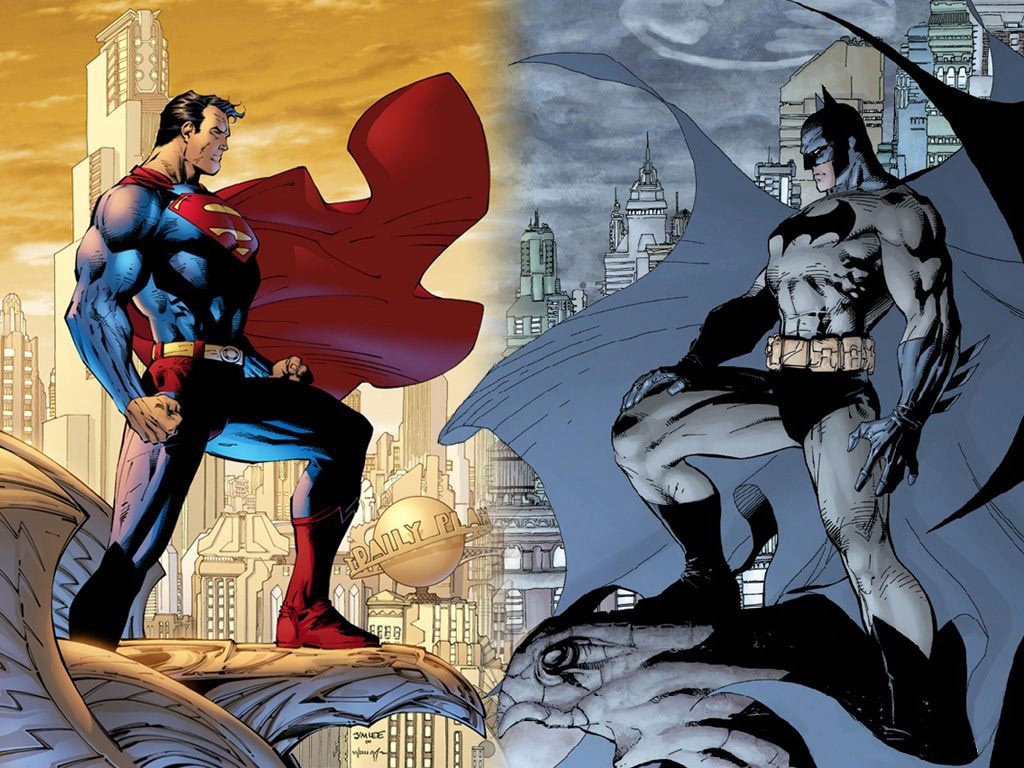
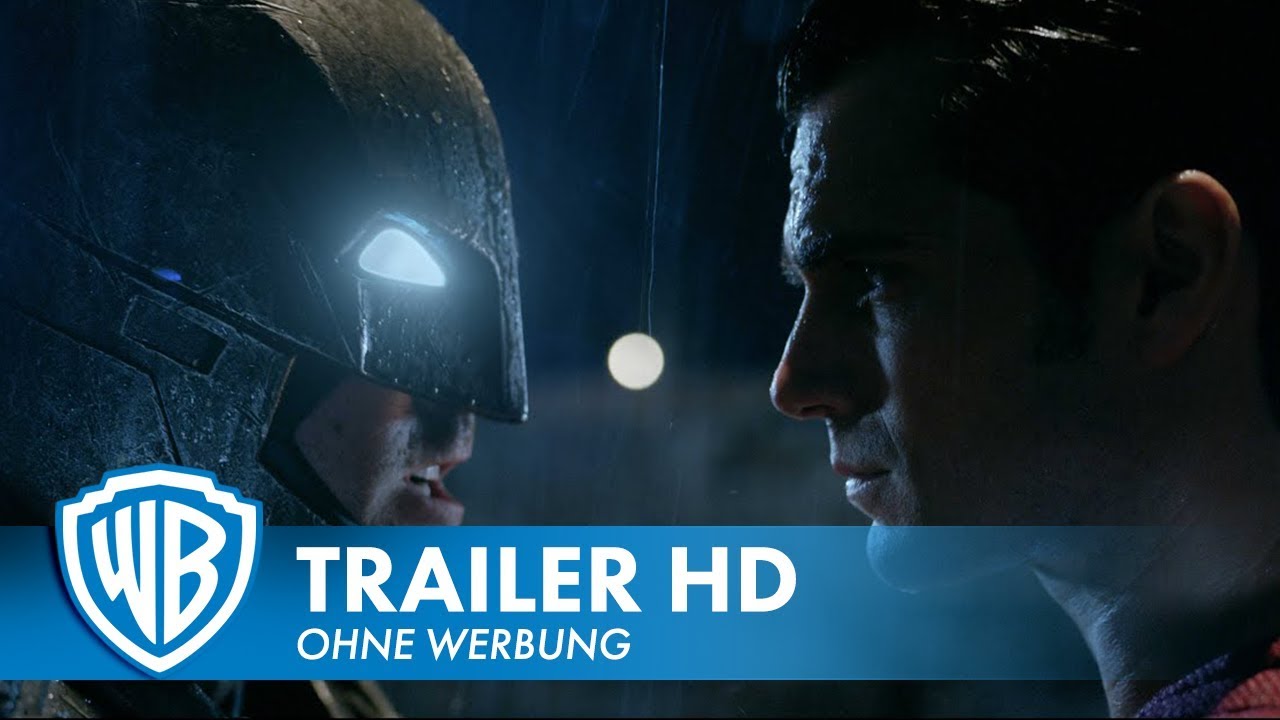
1. Batman and Superman (DC Comics)-


I tried to pick one. I really did. You can’t separate Batman and Superman, though. They represent the two sides of human nature- cynicism and hope. And yet both work together, (ideally), to fight injustice and promote peace.

I’m really interested to hear your opinions on this subject. Who do you think were the most memorable sci-fi characters of the 20th century? Who are your favorites? Take a moment to comment if you feel so inclined.

Keep on glowing in the dark,
Elora

Tuesday, January 5, 2016

Visions of the Future: The 1990s- Mainstream


Despite the fall of the Soviet Union, and the beginning of the end of the Communist experiment, the world of the 1990s was still rife with conflicts and tragedies. Formerly Soviet nations struggled to find order in their new freedom, and ethnic conflict in places like Rwanda and Bosnia led to mass genocide. The situation in the Middle East continued to be tense. In spite of these tumultuous events, however, the 1990s were a time of great multicultural reconciliation in other places. For example, in 1998, the Good Friday Agreement ended thirty years of violence between Protestants and Catholics in Northern Ireland.

Computer technology was completely revolutionized with the advent of the World Wide Web, which has affected the course of education, entertainment, and social interaction ever since.

Science  Fiction:

Literature-

Kim Stanley Robinson began his award winning Mars Trilogy in 1993 with Red Mars. The novel and its sequels- Green Mars (1994), and Blue Mars (1996)- as well as an anthology set in the same universe- The Martians (1999)- describe a future history in which humans terraform and colonize mars.

Permutation City was released by Greg Egan in 1994. It explored concepts of virtual reality, and uploading human consciousness, and won the John W. Campbell and Philip K. Dick Awards in 1995.
The next year, Neal Stephenson published The Diamond Age- the story of a girl in the lowest class of society raised by an interactive book intended for an upper-class child. It won the Hugo and Locus Awards in 1996.

Mary Doria Russell won the Arthur C. Clarke and British Sci-fi Association Awards, (among others), for her 1996 novel, The Sparrow. In it, a Jesuit priest is the sole returnee from an expedition to investigate music coming from the Alpha Centauri area. She followed it up in Children of God, published in 1998.

Television-

A wildly popular television incarnation of Batman, produced by Warner Brothers, and run by Bruce Timm and Eric Radomski premiered in 1992. Though it was geared towards young audiences, it held to the dark mood, and many of the important plotlines of the comic books. The show was the first in a long string of DC Comics animated shows, including Superman (1996), Batman Beyond (1999), Justice League (2001), and Justice League Unlimited (2004).

The X-Files, a crossover between science fiction, paranormal/horror, and government investigation television was first broadcast in 1993. It starred Gillian Anderson and David Duchovny as agents Dana Scully, (the skeptic), and Fox Mulder, (the believer), respectively. The two agents solved dark and mysterious cases reminiscent of shows like The Twilight Zone, and Alfred Hitchcock Presents.

Star Trek continued to have a strong fan base and cultural impact, as demonstrated by the two spin-off shows released in the 1990s. Deep Space Nine (1993), followed the crew of one of the Federation’s space stations; and Voyager (1995), told the story of a Starfleet ship lost in the far reaches of the Delta Quadrant.

A Star Trek-esque series, Babylon 5, started in 1994. This show, created by J. Michael Straczynski, was set on a space station that housed five different species from around the galaxy.

Farscape was a bizarre, sometimes even surrealist science fiction show that premiered in 1999. It starred Ben Browder as an astronaut catapulted to another part of the universe. He is taken aboard a living ship named Moya. Some of the main characters of the show were Character Shop designed animatronic puppets.

Movies-

The story of the original crew of the U.S.S. Enterprise was concluded in 1991 with the release of Star Trek: The Undiscovered Country. Creator Gene Roddenberry died that same year, though his vision continued on after him. A film that introduced Captain Kirk to The Next Generation’s Captain Picard, called Generations, came out in 1994, and was followed up by the first The Next Generation solo film, First Contact (1996).

Jurassic Park, directed by Steven Spielberg, stunned audiences in 1993 with incredibly realistic computer animated dinosaurs. The prehistoric eye-candy was complemented by an interesting sci-fi plot about a theme park genetically engineering dinosaurs.

In 1994, MGM  released Roland Emmerich’s Stargate. The plot revolved around an eccentric professor named Daniel Jackson, and a bitter and retired colonel named Jack O’Neil as they investigated an interstellar transportation ring discovered at an archaeological dig in Egypt. The film spawned a spinoff television show, Stargate: SG-1 (1997), that starred new actors plating Daniel Jackson and Jack O’Neill, as well as their new team members, Samantha Carter and Teal’C. The show lasted for ten years, and endeared itself to fans by its ability to make fun of itself and still remain a serious science fiction story.

Independence Day updated the type of alien invasion story found in H.G. Wells’ War of the Worlds for an action-movie loving public. It was released in 1996, was directed by Roland Emmerich, and starred Will Smith, Bill Pullman, Jeff Goldblum, and Mary McDonnell, (among others).

The 1990s would have missed out on having a Star Wars movie altogether, were it not for the release of the first prequel movie, The Phantom Menace, in 1999. It began the tragic tale of Anakin Skywalker, the boy who would become the man who would become both Darth Vader, and the father of Luke Skywalker.

The Matrix, released in 1999, was a mind-bending movie about virtual reality. Directed by the Wachowskis, it questioned the nature of reality, explored a myriad of spiritual themes, and pioneered “bullet time” cinematography.

Keep on glowing in the dark,
Elora

Monday, December 21, 2015

Visions of The Future- Top 5 70s and 80s Franchises Resurrected Recently

We seem to be living in an era of great nostalgia when it comes to science fiction and pop culture. Why come up with something new when you can redo something you loved when you were younger? Here are five franchises that were popular in the 1970s and 1980s that have been updated recently, whether by a remake, reboot, prequel, sequel, or Kickstarter campaign. I have included on this list both things I am excited about, and things I believe should have been left to rest in peace.

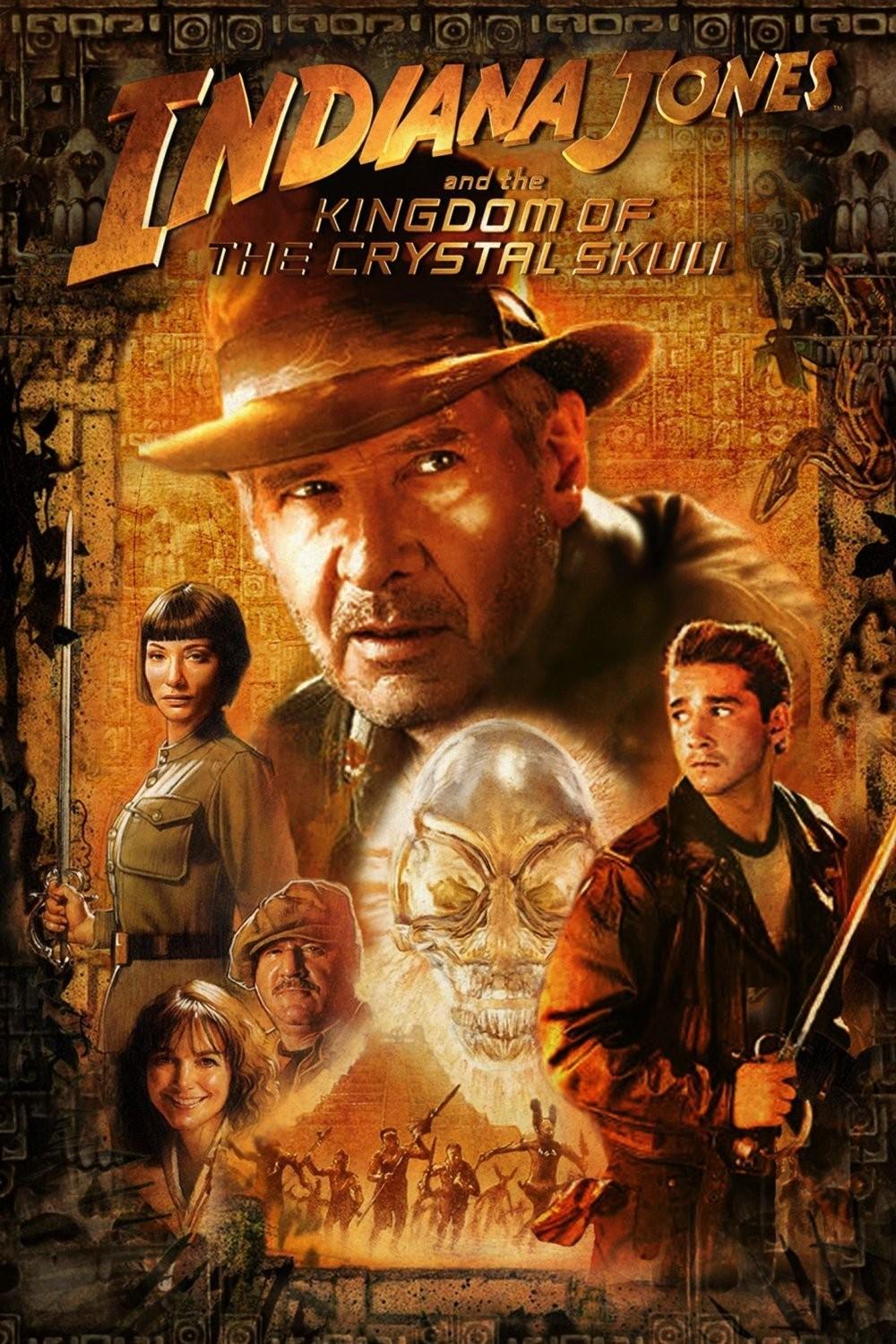
5. Indiana Jones (1981-2008)-


Why would I include Indiana Jones on this list? You may ask yourself. It’s not science fiction. Or is it? George Lucas and Steven Spielberg teamed up once again with their stars Harrison Ford and Karen Allen to create a new Indiana Jones adventure starring Indy and his son, played by Shia LeBouf. Unfortunately, the film’s plot revolved around aliens, which had not previously played any role in the franchise. Fans were disappointed.


4. Mystery Science Theater 3000 (1988-2015)-


After MST3K met its demise in 1999, the creators started working on their own seperate projects, (most of which still revolved around picking on movies). Joel Hodgson started Cinematic Titanic to continue riffing on old B-movies. Mike Nelson worked on creating Rifftrax, audio commentaries that can be synched to many movies, both good and not-so-good. Just this year, however, Joel started a Kickstarter campaign to bring back MST3K in all its glory. On December 11, it was fully funded, and 14 new episodes are slated to be released.


3. The Terminator (1984-2015)-


The original Terminator film was followed by four other films in 1991, 2003, 2009, and 2015. The most recent, Terminator Genisys, came out this summer, and is intended to serve as the first film in a new trilogy. Evidently, like its titular machine, this franchise is nearly impossible to kill.


2. Star Trek (1966-2016)-


Star Trek continued after cancellation in 1969 with five spin off series, ten films, and scores of novels, comic books, and video games. However, after the cancellation of the widely-panned prequel series Enterprise in 2005, it seemed as if Star Trek’s dilithium crystals were finally depleted.J.J. Abram’s reboot film Star Trek in 2009 breathed new life into the series, and brought in many new fans. It was followed by Star Trek Into Darkness in 2013, which mirrors Star Trek II: The Wrath of Khan, (in much the same way the mirror universe mirrors the prime universe, in my opinion). The trailer to the next film, Star Trek Beyond, was released yesterday. While the new series may not hold true to the philosophical heart of the original series, it is an entertaining way to reintroduce the characters into popular culture. Also, CBS recently announced that a new Star Trek television series will begin in January of 2017.


1. Star Wars (1977-2015)-


But what can I tell you that you don’t already know from every advertisement you see on television and online? I am seeing the new movie on Thursday, and am planning to write a (spoiler-free!!!) analysis on whether or not I think it fits into the Star Wars universe.


Keep on glowing in the dark,
Elora